

How Different LLMs Tell Different Stories About Your Brand
One Brand, Two Realities.

AI search is often talked about as if it’s one single entity, one shift towards a new future for search and one single channel, but the reality is very different.
The same brand, asked about in two different LLMs, can be described in two completely different ways. Different sources and different signals present two different truths.
If you’re working in PR and you’re thinking more about how you can influence visibility in AI search, fundamentally understanding that different LLMs can present different results should be at the core of your thinking when developing your PR strategy for AI.
AI Doesn’t Agree On Who You Are
One of the biggest misconceptions that brands make about AI search is assuming that AI has a single understanding of who that brand is - the truth of the matter is, it doesn’t.
LLMs, such as ChatGPT, Perplexity and Google Gemini, don’t have one unified view of the information across the web. Each model is developed differently, has its own way of being trained and has different views of what a ‘good answer’ looks like.
Simply put, this means that your brand can appear authoritative in one platform, like ChatGPT, but completely invisible and irrelevant in another, say Perplexity. For eCommerce brands, too, there can be a critical difference in how a brand is viewed. ChatGPT may view you as commercial, whereas Perplexity may see you as purely informational - a critical distinction when you’re trying to sell products.
From a PR perspective, this is happening now, and it ultimately is adding a layer of complexity to PR strategies because PRs are no longer just trying to influence how journalists talk about a brand; we’re also trying to influence how machines understand the brand, how they categorise the brand and how they present all of that to users.
The Citation Split - Why Different LLMs Trust Different Sources
If you ask the same question to two different LLMs, you’ll typically see a clear difference in the sources that are cited.
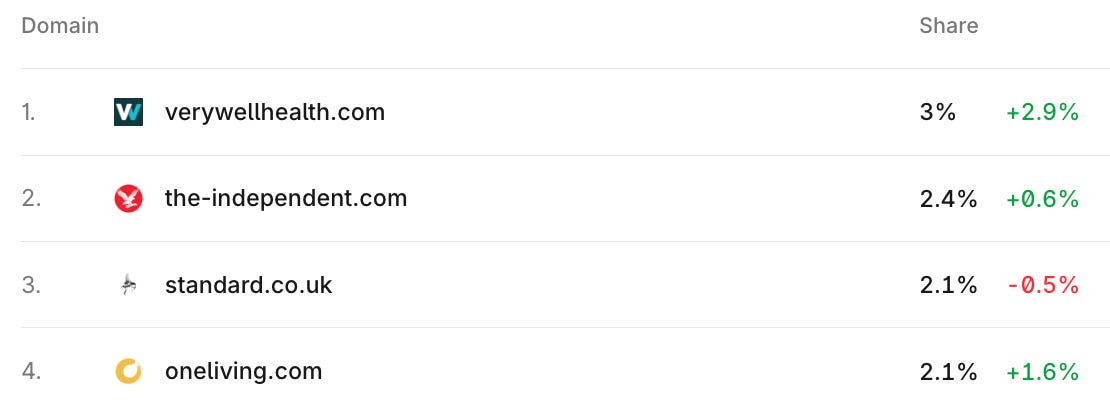
An example below for a brand that sells products around gut health, the commonly cited domains for each LLM are strikingly different, and this is top-level before even taking into account the different personas of people searching:
ChatGPT frequently cites:
Perplexity frequently cites:
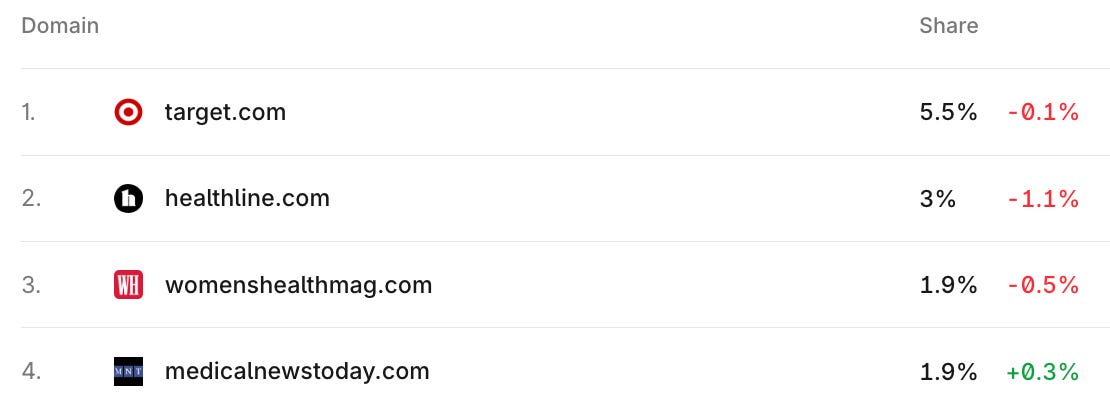
Anecdotally, the big difference in this example is that Perplexity is clearly more information-driven for this topic; they’re using sources that deliver clear evidence-backed information around health. Whereas ChatGPT, by prioritising sites such as The Independent and the Evening Standard are showing it is delivering direct product information, particularly for The Independent, who are well known for its IndyBest category that is focused on recommending products directly to consumers.
It’s also important to understand that both of these approaches are valid and need to be factored into any holistic PR strategy.
In my previous post on Substack, I shared another real-life example for one of our clients where Perplexity cited BBC Good Food for a health-related query, whilst ChatGPT relied on the NHS website instead.
This isn’t random for the two models; they interpret things differently, and they trust different sources altogether. Essentially, each model makes judgment calls about credibility, risk, and the quality of information provided based on how the model has been designed and trained.
The intricacies of the different models can be difficult to understand, but the implication is simple for any brand trying to build visibility on AI platforms:
Two LLMs can tell different stories about the same brand, but both believe they are totally correct.
What This Means for PR
Traditionally, PR as a channel has been measured by moments:
A huge campaign pulling in tons of coverage
A spike in new links built to the site
A standout piece of coverage on a dream publication
But AI looks at these things differently and doesn’t necessarily reward these moments in time. AI rewards consistency, and it rewards patterns.
Now we know and understand that different LLMs trust different sources, we know that a single type of coverage sporadically will never be enough for consistent success across AI search and across different models. Any strategy that targets just one publication type and just one content format risks shaping a brand for a single model and encouraging invisibility across others.
This is why brands that can be considered to have great PR strategies are still missing from some AI-generated answers across some platforms; they simply aren’t understanding the need for variety.
Strong coverage will not instantly grant you visibility within AI search, but consistency matched with relevancy and a variety of different sources does deliver the visibility that brands are looking for.
PR is in the middle of a shift from just purely trying to gain attention to building consensus across all of the different AI models - this is where a brand can achieve consistent success across the board.
The Importance of Personas
There’s an extra layer to this of equal importance, and that is personas.
LLMs aren’t just answering questions; they’re providing a search experience that is unique to the individual. Think of this from your own point of view as a user, the search experience is fundamentally different, how you search, and the response you’re receiving is different to searching on Google. You give more detail, more insight, and LLMs essentially want to reward that information you’re giving by personalising your search experience and tailoring answers to exactly who you are and citing sources that you trust.
This creates an additional level of complexity and presents a challenge for any PR strategy:
Platform differences - ChatGPT v Perplexity v Google Gemini
Persona differences - Expert Led v Value Led v Research Focused
A brand may be well represented with a value-driven persona, but it may lack the depth of understanding to surface for the more research-focused persona - this is where a standard PR strategy could fall down.
A media list built for one persona type simply doesn’t have the breadth and complexity to shape how all AI models and personas within them understand your brand. PR strategies now need to influence on a more granular level, and they need to understand who is asking the questions, the publications they consume and the type of information they’re looking for.
How The SEED Framework Can Help Shape Your New PR Strategies
If we now understand that LLMs build a narrative around your brand based on the signals they trust, then your PR strategy can’t be viewed through a single lens and it can’t have single channel thinking - as an example, for an eCommerce brand, this means your PR strategy can’t just focus on product led coverage if you want to achieve success across all aspects of AI search.
The challenge isn’t about choosing which AI model to target; it’s about building a strategy that reinforces the same understanding of the brand across all of them. This is why we’ve structured our approach around our SEED framework.
S-ituational Relevance
Ensuring your brand appears consistently in the correct context, not just in high authority publications.
E-xpert Led Content
As has been the case with the traditional search model, expert-led content builds trust and credibility for your brand. LLMs are heavily influenced by expert comms, and a solid PR strategy should always be looking to bring expertise into play. Consistency with expert-led content allows for consensus to build across all AI models and will help the LLMs distinguish your brand from competitors.
E-nriched Product Data
Securing coverage that effectively communicates what you’re selling, your price point and why it’s different from competitors helps LLMs connect your products to the intent behind people searching, and it also allows them to marry your products up with the correct personas.
D-istinct Brand Message
Brand messaging, as has always been the case when marketing a brand, ties everything together. Consistent messaging across earned, owned and social channels allows AI to form a clear understanding of your brand, what you should be known for and why you have authority within your given niche.
Our SEED framework isn’t about building a strategy that works for one AI model; it’s about building consensus across multiple models and driving consistency over time to ensure that AI visibility is strong over a sustained period.
Multi-Model Visibility Is What We’re Looking For In 2026
Visibility in AI search is going to continue to shoot up the list of priorities for brands in 2026, but as the year progresses, generically appearing in “AI search” won’t give the success we’re all looking for.
The real consideration when understanding how successful a brand is within AI search comes when you look to analyse if you’re visible across multiple LLMs, if you’re presenting your expertise for the right topics and if you deliver consistency.
When understanding if a PR strategy has had the desired impact with AI search, consider multi-model visibility - or put simply, how consistently is your brand surfaced across ChatGPT, Perplexity, Google Gemini and any other AI model that may emerge throughout the year.
If AI search is going to continue to fragment across multiple different LLMs, then PR can be the channel that connects them.
The idea of “multi-model visibility” is fascinating. It feels similar to the early days of SEO when brands had to optimize for different search engines, except now the variation comes from how LLMs interpret authority, credibility, and intent.