
As eCommerce specialists, we often encounter resistance to some of the tried-and-tested SEO techniques we recommend when working with luxury and premium brands. While these strategies are widely considered best practice across all types of websites, they can sometimes clash with brand aesthetics or internal marketing priorities, particularly when there’s a strong emphasis on visual design or curated user journeys (e.g. product page breadcrumbs). In short, brand always trumps SEO best practices at these businesses.
That said, the landscape is shifting. More and more premium brands are beginning to focus on GEO/AEO and all things AI Search, particularly having a strong awareness that these LLM platforms could be the future of brand discovery and brand perception. Over 9 months ago, we wrote about how SEO is shifting to become more of a brand channel thanks to AI search.
However, the challenge luxury brands will face is a general neglect of SEO best practices. Bad SEO means bad GEO/AEO. And in our GEO guide for CMOs, you’ll find this table, which outlines stage one of any GEO/AEO is discovery, which is brand discovery.
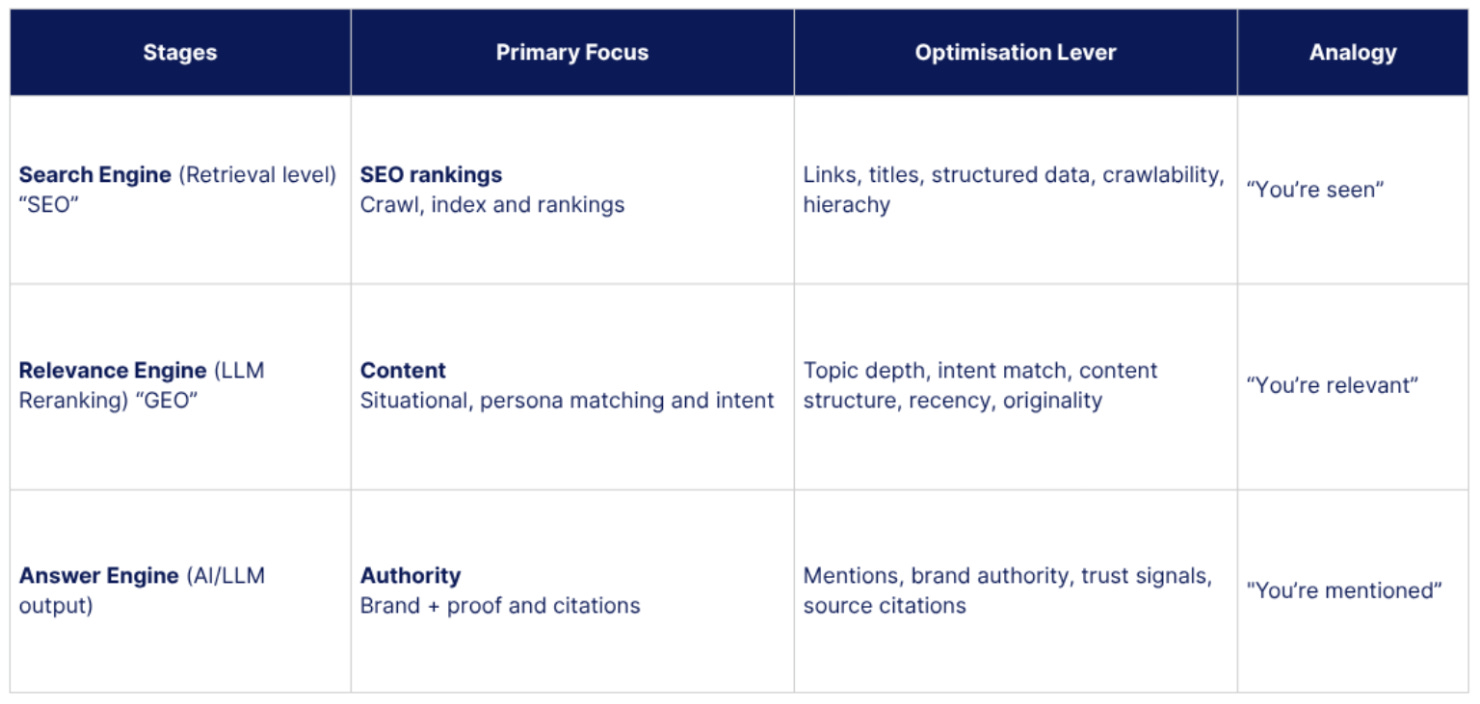
The key point to emphasise here is that these premium brands will naturally rank very well for branded searches, but for brand discovery across LLMs, your brand needs to be visible for non-brand terms or at least attempt to own the narrative around your brand.
In this post, we break down a number of core SEO techniques we often recommend, explain why they matter for both users and search engines, and showcase how some of the biggest premium brands in the world have successfully implemented them, each in a way that still respects their unique tone and visual identity.
Whether you’re part of a luxury fashion house, a premium beauty brand, or a high-end homeware label, you’ll find actionable insights and adaptable approaches to elevate your organic performance while avoiding clashes with your brand team.
The key message here is that before you think about AI search, you need to sort the fundamentals of SEO for discoverability.
Please refer to these jump links to different sections of the article if you’re looking for specific SEO/GEO examples from premium brands.
Internal linking techniques:
AI / LLM-friendly content
On-page SEO techniques
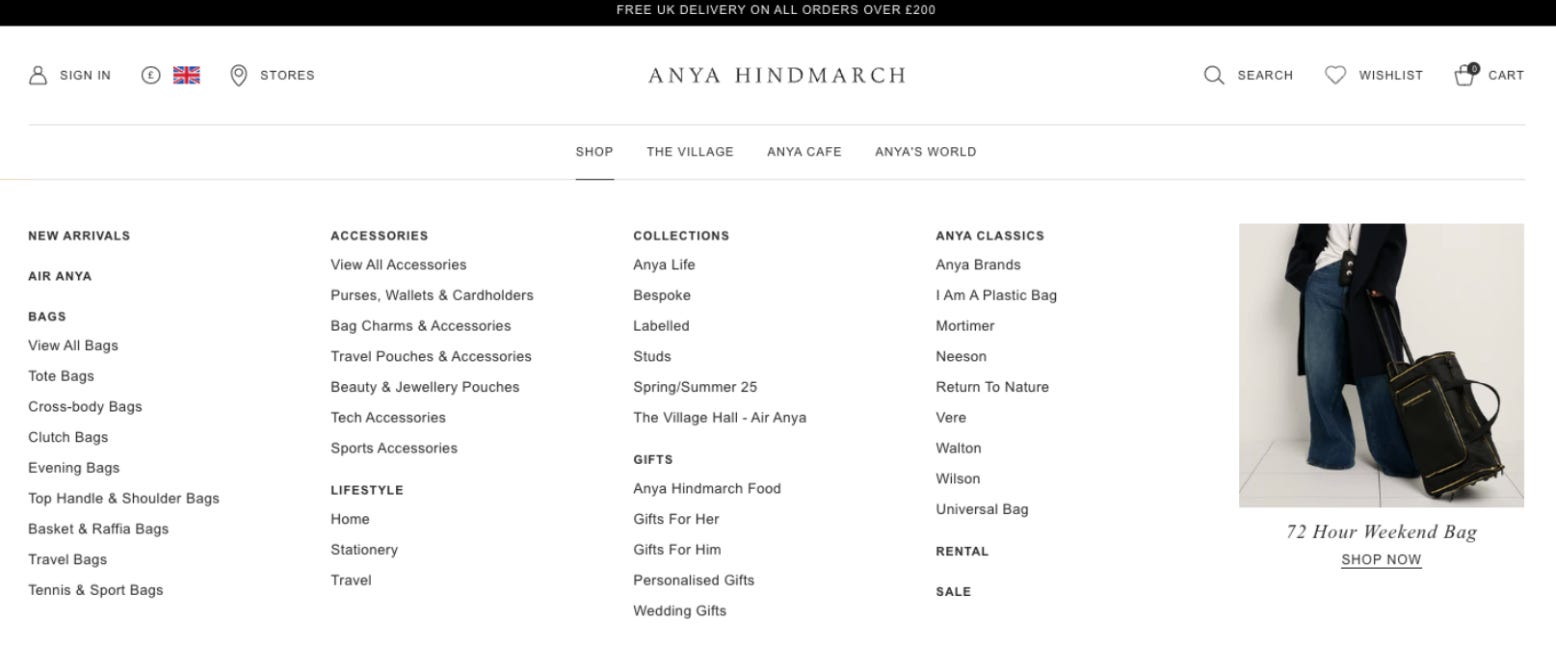
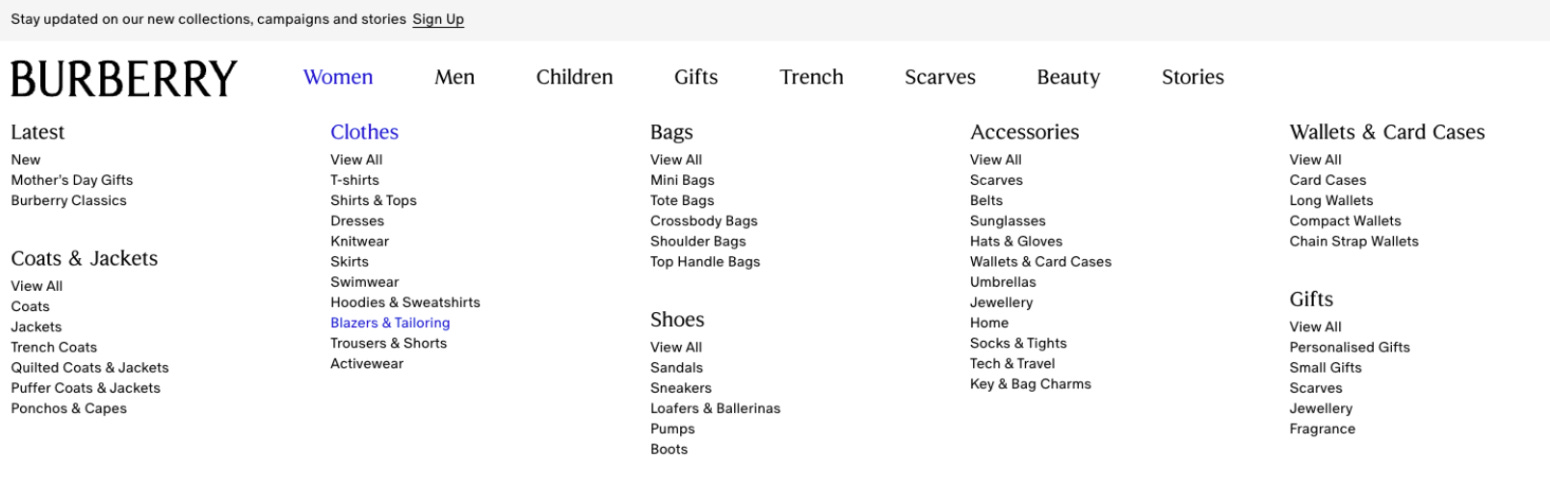
Optimised Mega Menu - Anya Hindmarch & Burberry
In SEO, it’s crucial to link to your most important pages directly from the main site menu.
Placing these links at the top signals to Google that they hold high value. Because the menu appears on every page of the website, it significantly boosts the internal link equity of those key pages.
Some clients hesitate to include too many items in their menu, concerned it might appear cluttered or overwhelming. This is a valid concern, as an overloaded menu can lead to decision fatigue or “analysis paralysis.” That said, with thoughtful design and a mixture of internal linking strategies, it’s possible to create a menu that is both visually clean and highly effective.
Below, you’ll find a proposed structure that strikes a balance between SEO priorities and brand design aesthetics from Anya Hindmarch and a larger, more in-depth menu from Burberry.
Anya Hindmarch
Burberry
HTML Sitemap - Prada
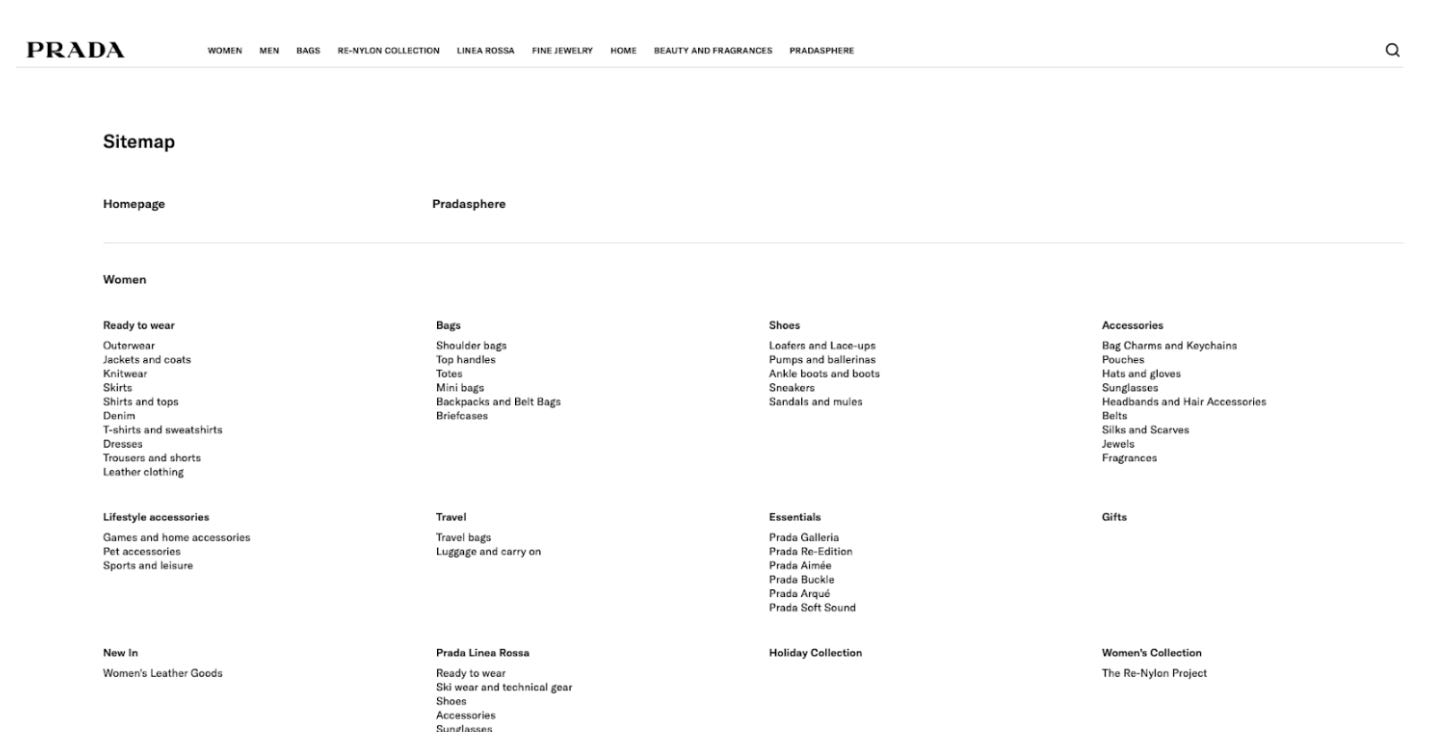
HTML sitemaps are one of the most effective internal linking strategies we use (outside of the menu). They help Google and other search engines crawl your website by clearly directing it to all of your category and subcategory pages on site.
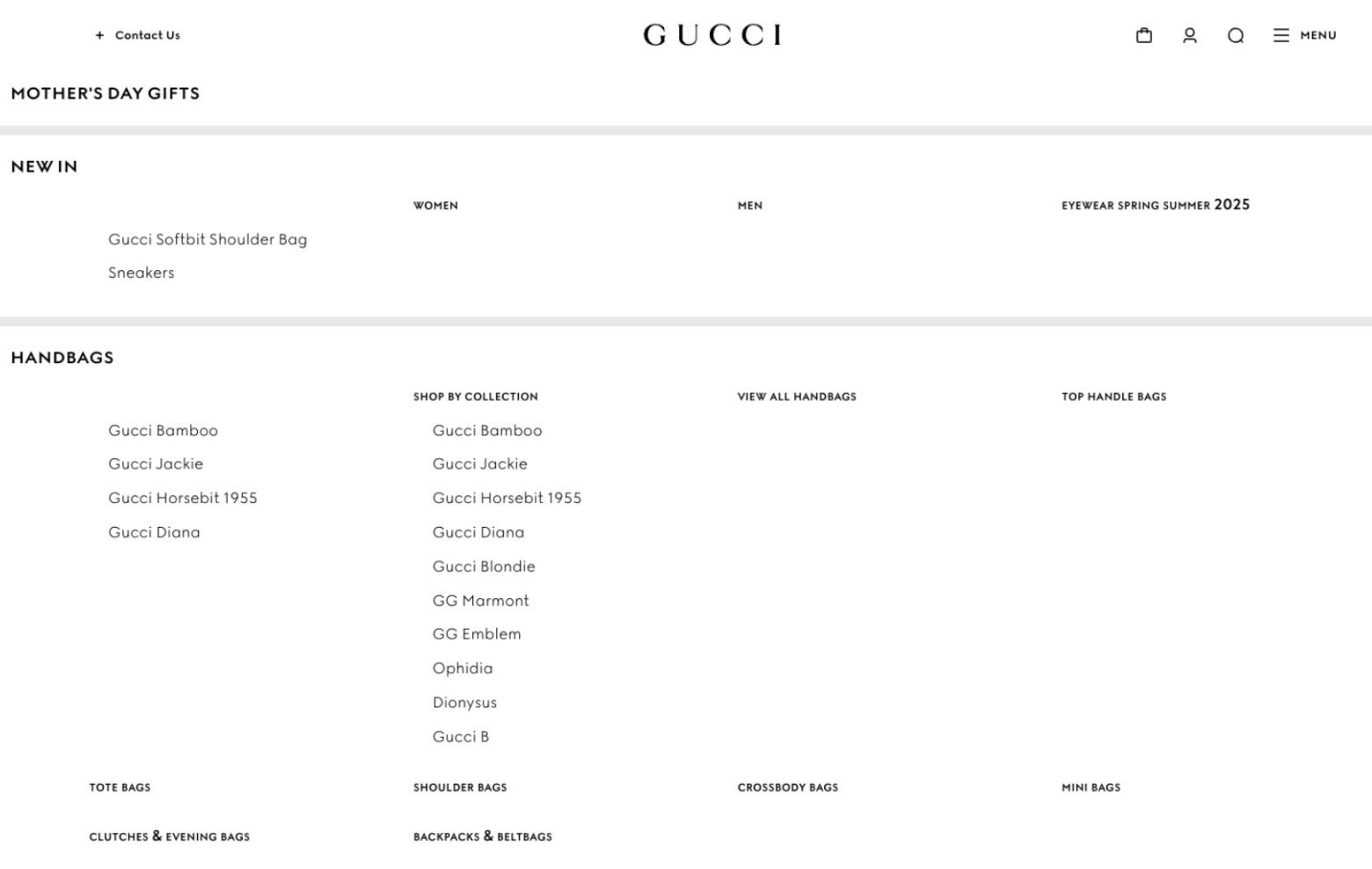
If your website has a large number of collections, we recommend organising the sitemap using headings, like in the Prada and Gucci example below, to make it easier for both users and crawlers to navigate.
When creating your HTML sitemap, be sure to exclude any pages that:
Return a 404 error
Redirect to another page
Are product pages (as these change frequently)
Are blog posts or low-priority pages that don’t need to be indexed
Below, you’ll find an example from Prada, which uses sectioned headings for clarity, and Gucci, which takes a more minimalist approach while still maintaining effective structure.
Prada
Gucci
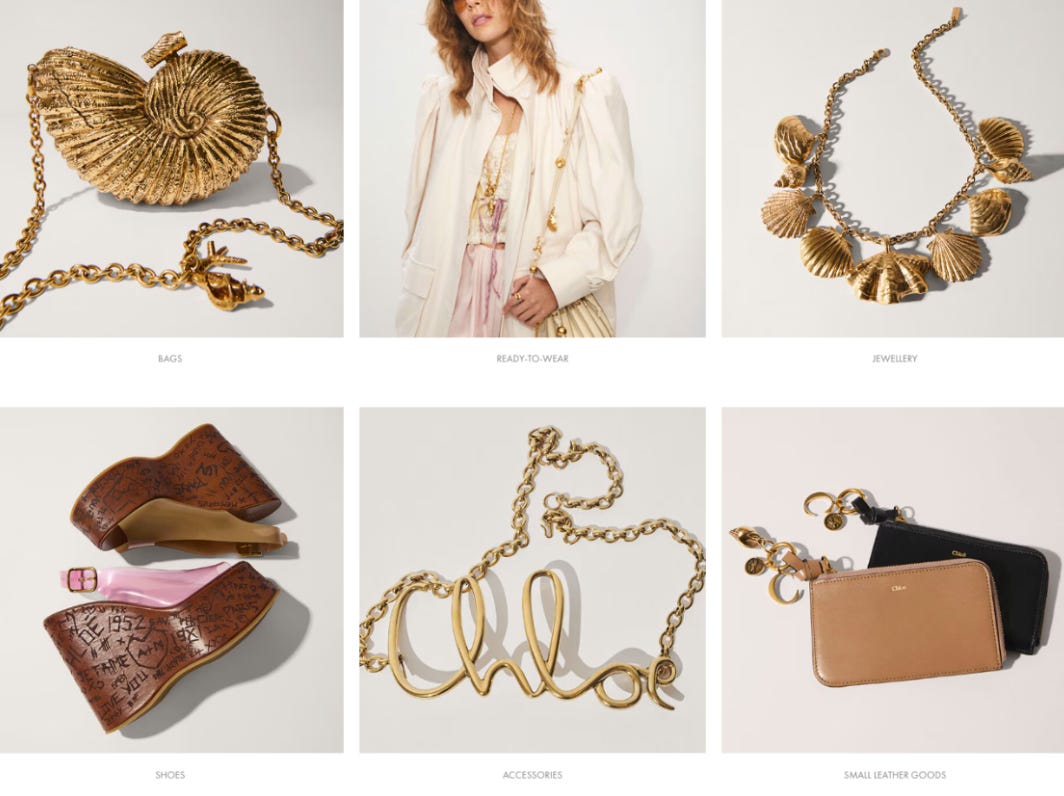
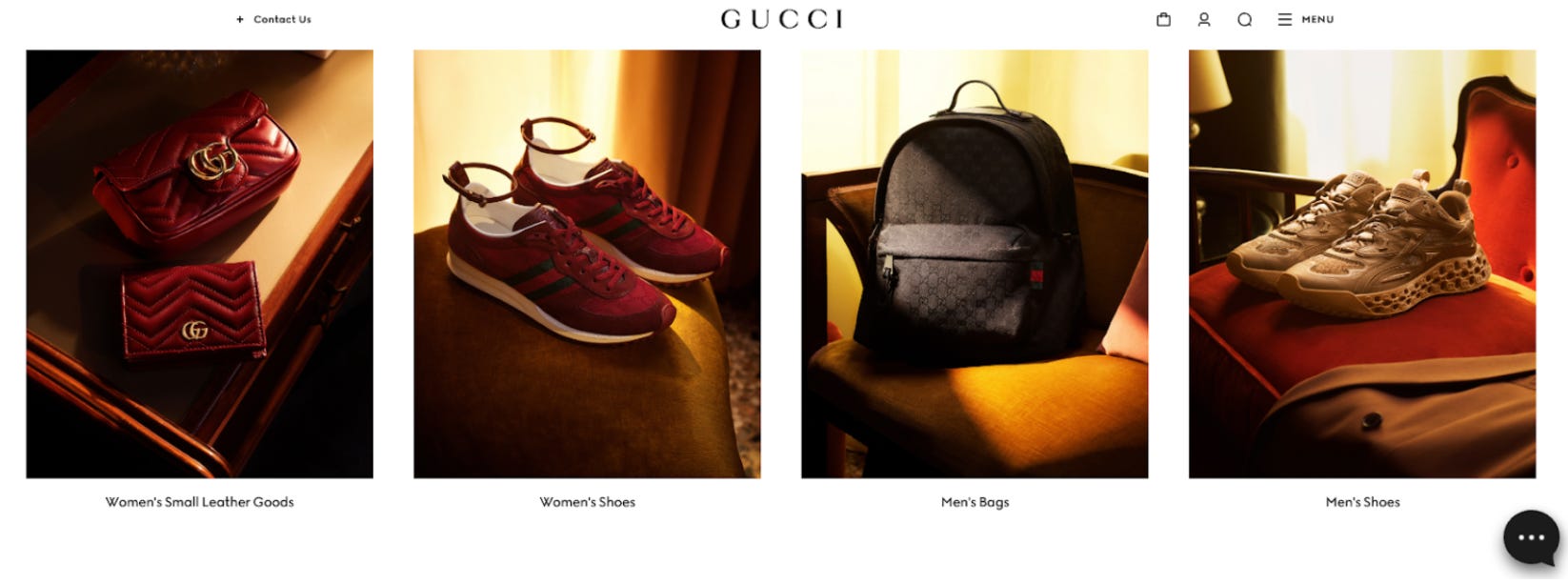
Static Category Linking on The Homepage - Chloé
Just like the site menu, having static homepage links helps signal to Google which pages are most important on your website by reinforcing their visibility and relevance.
While many brands are cautious about adding static links to the homepage, since it’s prime real estate and is often shared by multiple teams, there are smart, subtle ways to do it.
For instance, these links can be placed further down the page or “below the fold,” allowing room for high-impact content, such as campaign visuals, promotional graphics, or featured products.
Below, you’ll see how Chloé and Gucci implement this technique elegantly, ensuring strong SEO support while maintaining a clean and refined design.
Chloé
Gucci
Long Breadcrumbs on Category Pages - Kate Spade & Louis Vuitton
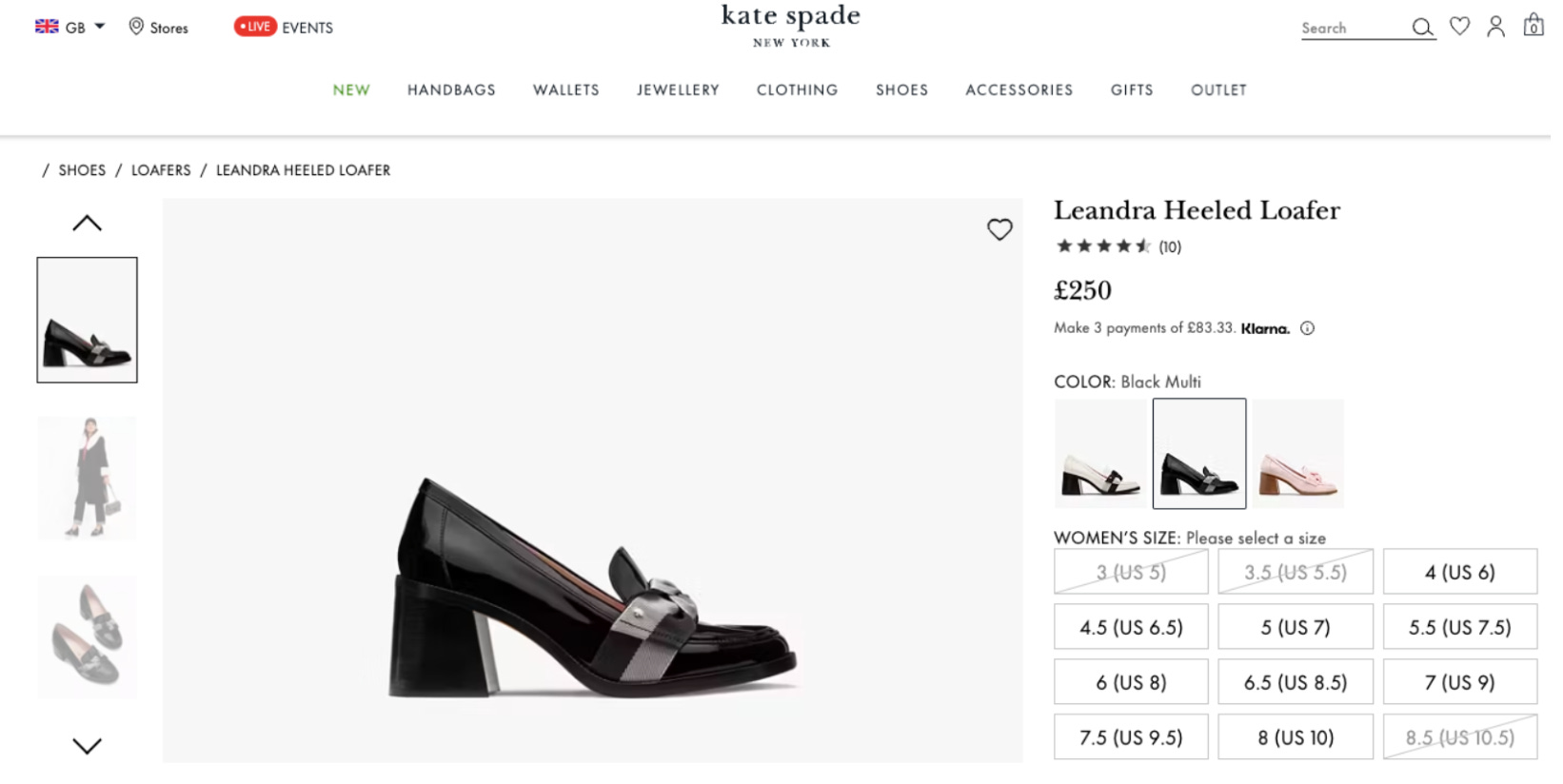
Long breadcrumbs are one of the first SEO recommendations we make to new clients, and for good reason. They enhance user navigation, provide Google with a clear and efficient crawl path, and communicate the structure of your site from the homepage down to individual product pages.
There are several ways to implement long breadcrumbs across your site. The most common placement is in the top corner of product detail pages (PDPs) and collection pages (see Kate Spade example).
However, some brands choose to position them below the fold based on design preferences rather than functionality (see Louis Vuitton example for this).
From an SEO standpoint, placing breadcrumbs at the top of the page is ideal. This not only improves visibility for users, especially on mobile, but also signals to Google that breadcrumbs are an important part of the page structure. While placing them below the fold can still be effective, it’s generally less efficient and more likely to be overlooked by mobile users.
Breadcrumb links above the fold, Kate Spade
Breadcrumb links below the fold
Subcategory Links On a Collection Page - Louis Vuitton
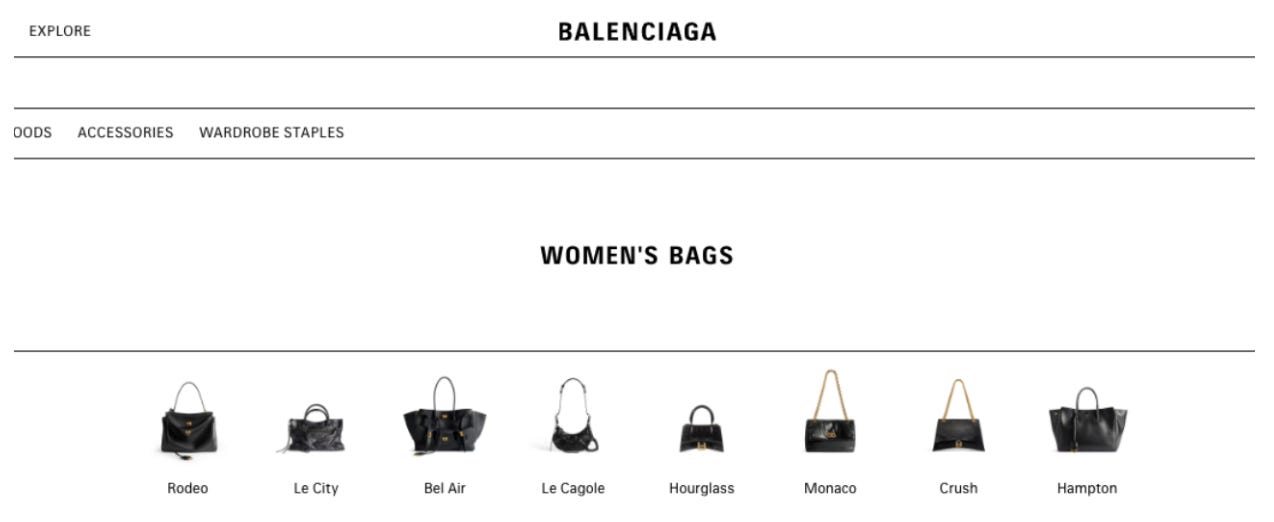
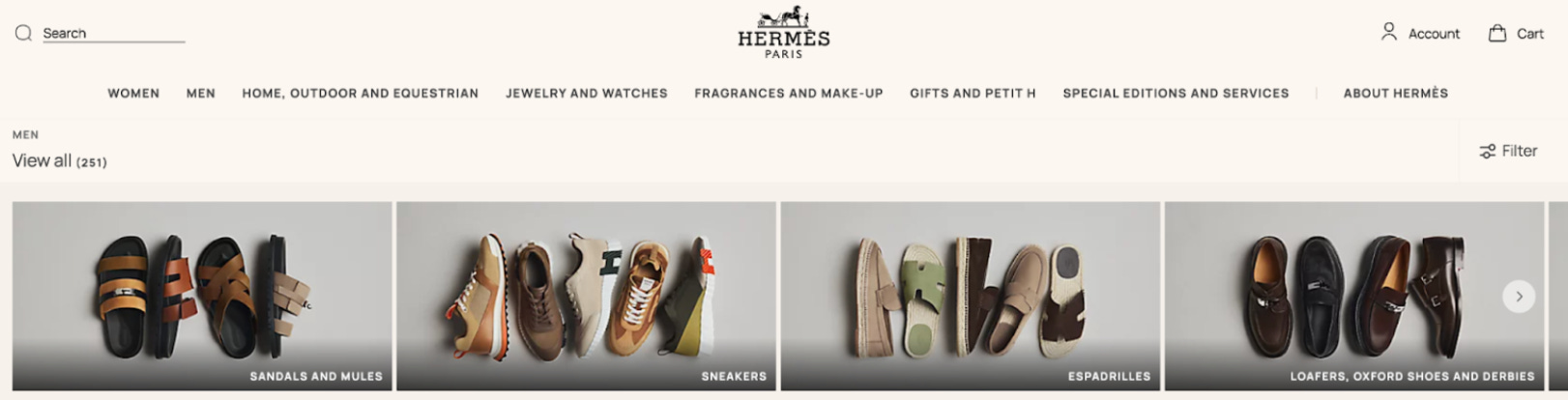
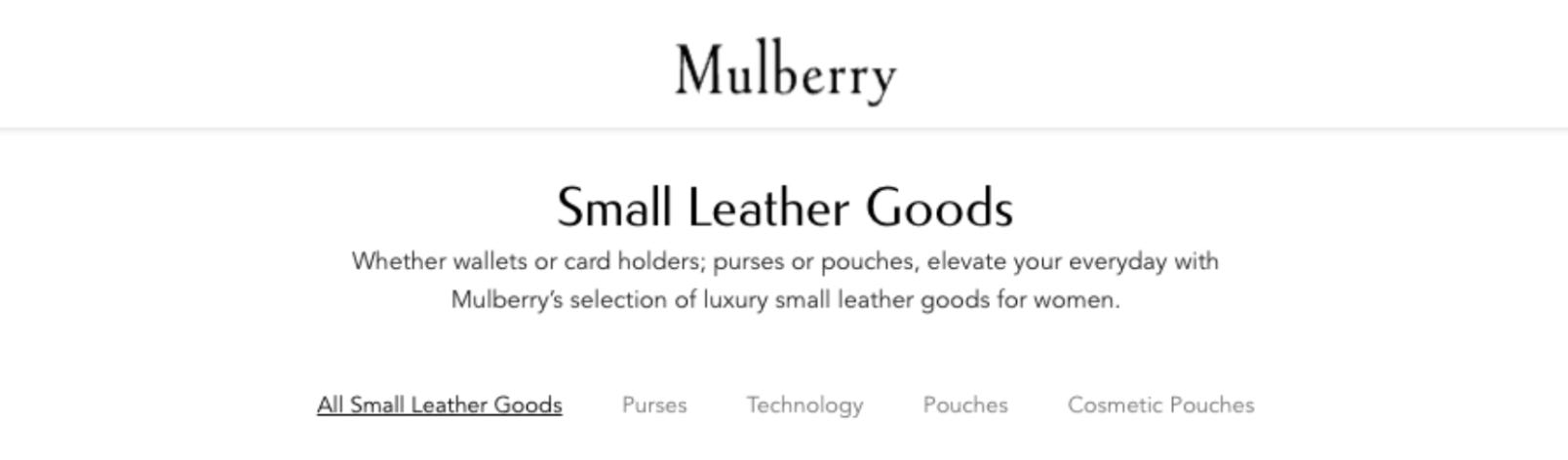
Subcategory links are typically placed above the fold on collection pages and offer users a way to explore different variations within a broader product category. These links are highly valuable from an SEO and user experience perspective, as they provide deeper access to pages that may not be easily found through the main menu or homepage.
Different brands take different approaches to how these links are displayed. For example, Balenciaga uses imagery to visually highlight available subcategories, creating a more immersive browsing experience. In contrast, Mulberry opts for a more minimal approach, featuring simple hyperlinked text at the top of the product listing page to guide users subtly without distracting from the product grid.
Subcategory Links On a Collection Page with Images - Balenciaga
Subcategory links on a collection page with images - Hermes
Subcategory links on a collection page (discrete design) - Mulberry
Adding “Luxury” or “Designer” in The Home Page Title Tag
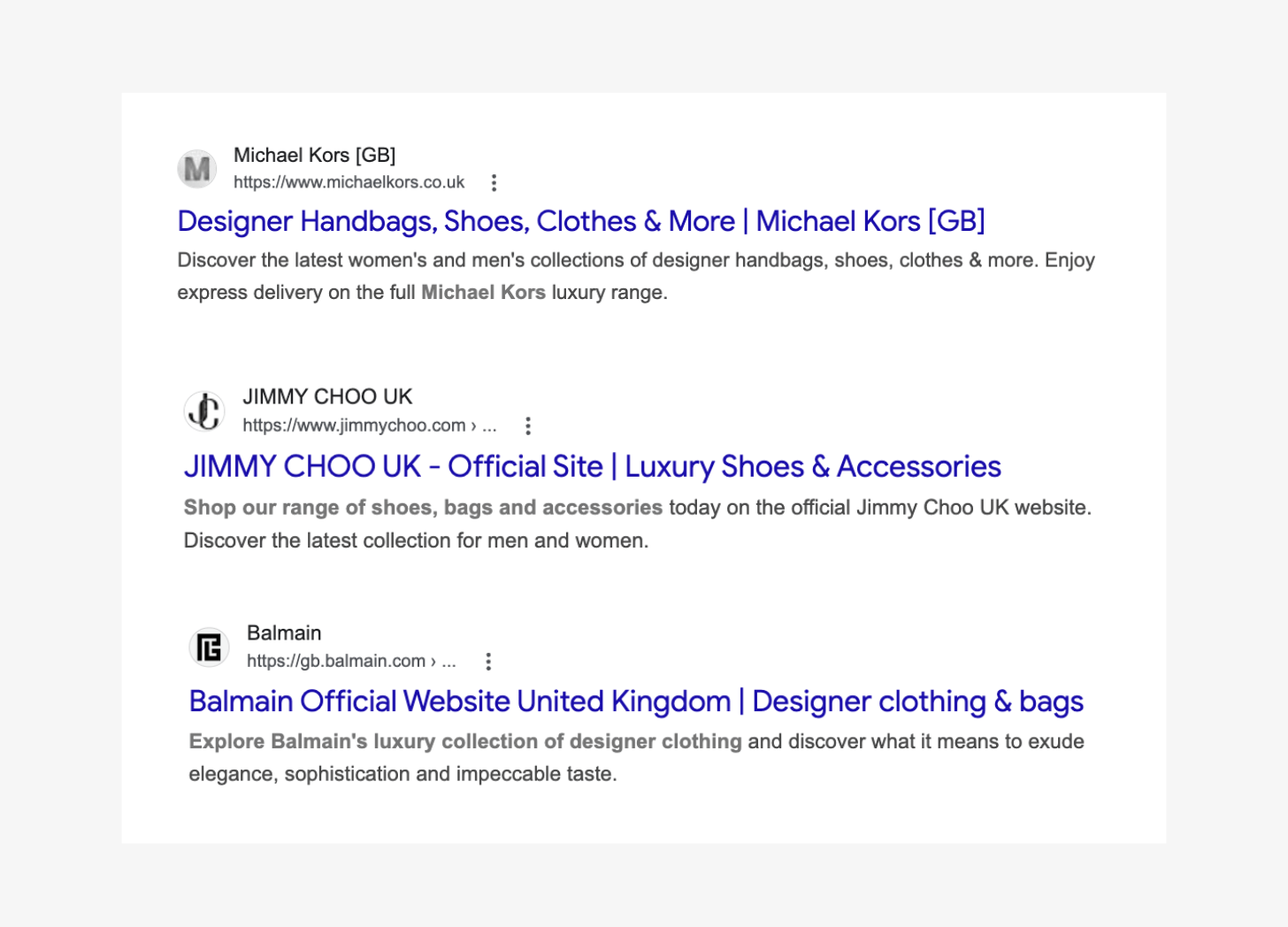
Including keywords like “luxury,” “designer”, or “premium” in your homepage title tag is a smart way to signal the value and positioning of your products to search engines. This helps ensure you’re targeting the right audience; those actively looking for high-end products, rather than competing for broad, generic terms like “coat” or “dress,” where you’ll appear alongside lower-priced competitors and marketplaces.
Optimising in this way not only improves your visibility to the right customers but also helps manage user expectations. For example, if someone clicks on your “coats” page expecting high-street pricing and sees premium prices instead, they’re likely to bounce. Clear positioning upfront can reduce this mismatch and attract shoppers who are genuinely looking for high-quality, designer-level products.
Below are examples of several premium brands that have successfully adopted this strategy.
Search Engine-Friendly Product Naming Conventions
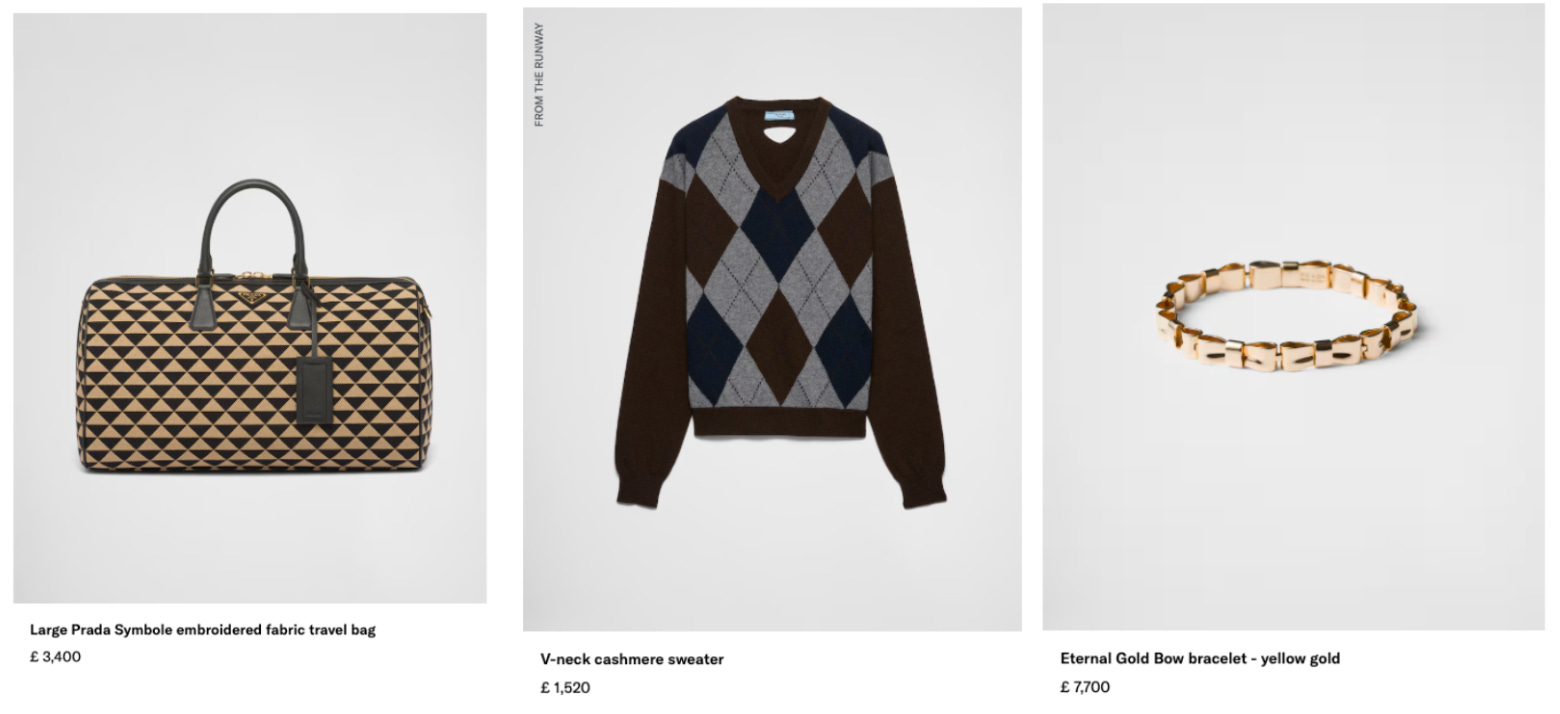
It’s great to see brands like Prada and Burberry adopting optimised product naming and descriptive anchor text techniques on their PLPs.
Too often, we see brands use creative or overly abstract product names that don’t clearly communicate what the item is, its colour, or material. For example, products might be listed under a unique product name [see examples below] or described using unconventional colour names like “Mocha Mist” instead of “brown,” or “Pistachio” instead of “green.” While it’s completely fine, and often on-brand, to use these unique descriptors, it’s important to also include clear, searchable context.
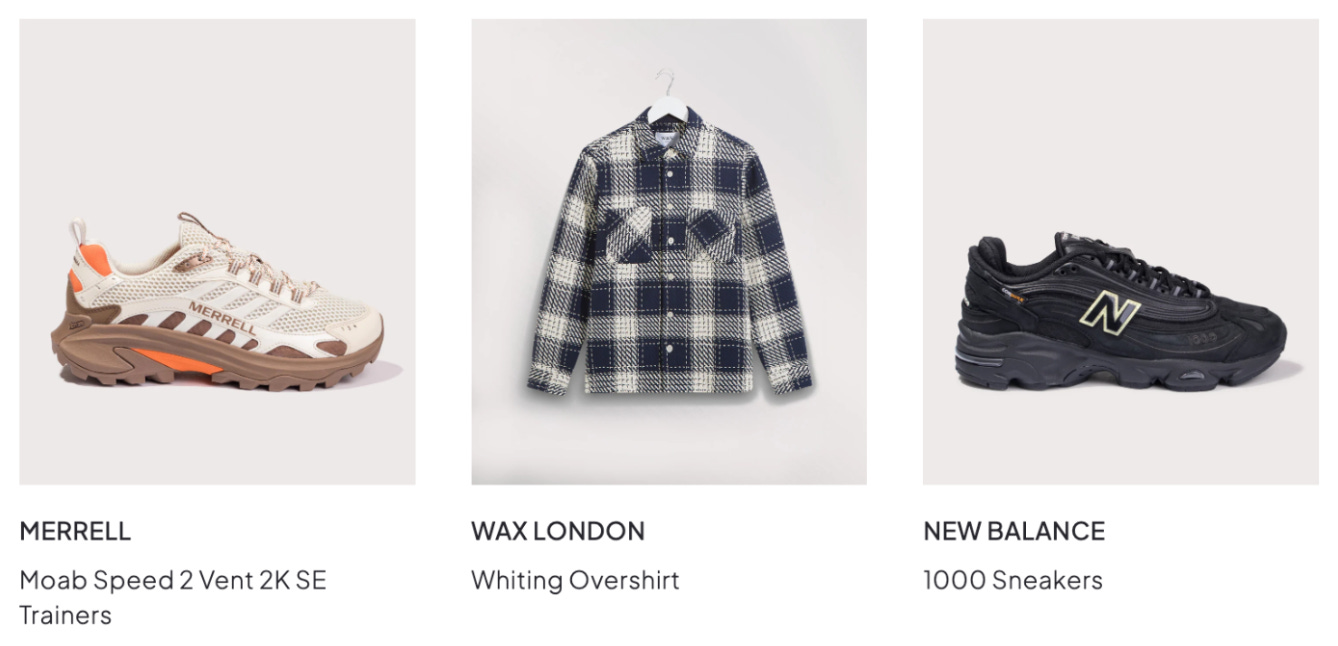
Adding terms like “green” after “pistachio” or “wool coat,” after a unique product name ensures both Google and users can better understand, search for, and find the products they’re looking for. It’s all about combining creativity with clarity to support both brand voice and discoverability.
Optimised Collection Page H1
As with the homepage H1, and all H1s, it’s important to clearly set context for the collection page. For example, Burberry includes “cashmere” in the H1 for their scarves collections.
This signals to both users and search engines that the products sit at a higher price point than a generic “women’s scarves” or “men’s scarves” H1 would.
Using the material within the H1 is a smart and effective way to manage user expectations and position the collection appropriately, particularly if you want to avoid explicitly using terms like “luxury” or “premium.”

LLM & AI-Friendly Content
Repair information with an optimised & branded H1
Whilst it might seem obvious that it is the Louis Vuitton repairs page if it is on the Louis Vuitton website and says ‘repairs’ it’s much more search engine friendly and avoids stockists of your brand outranking you for that term.

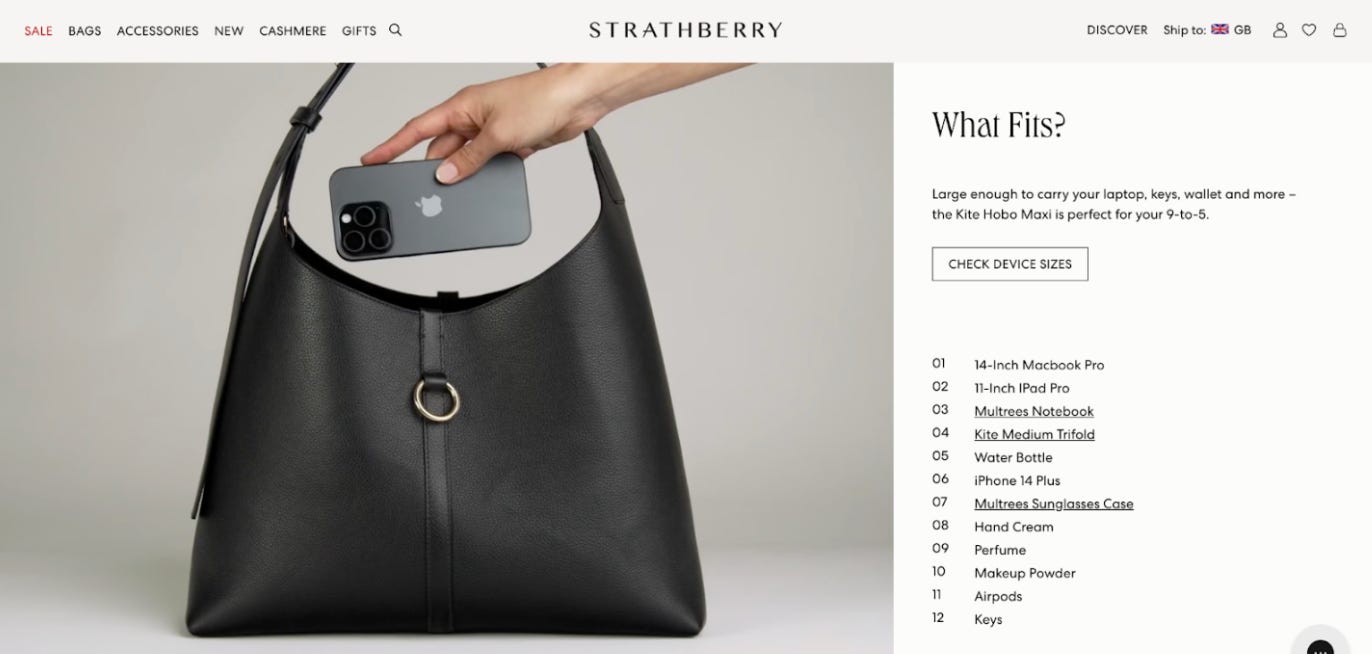
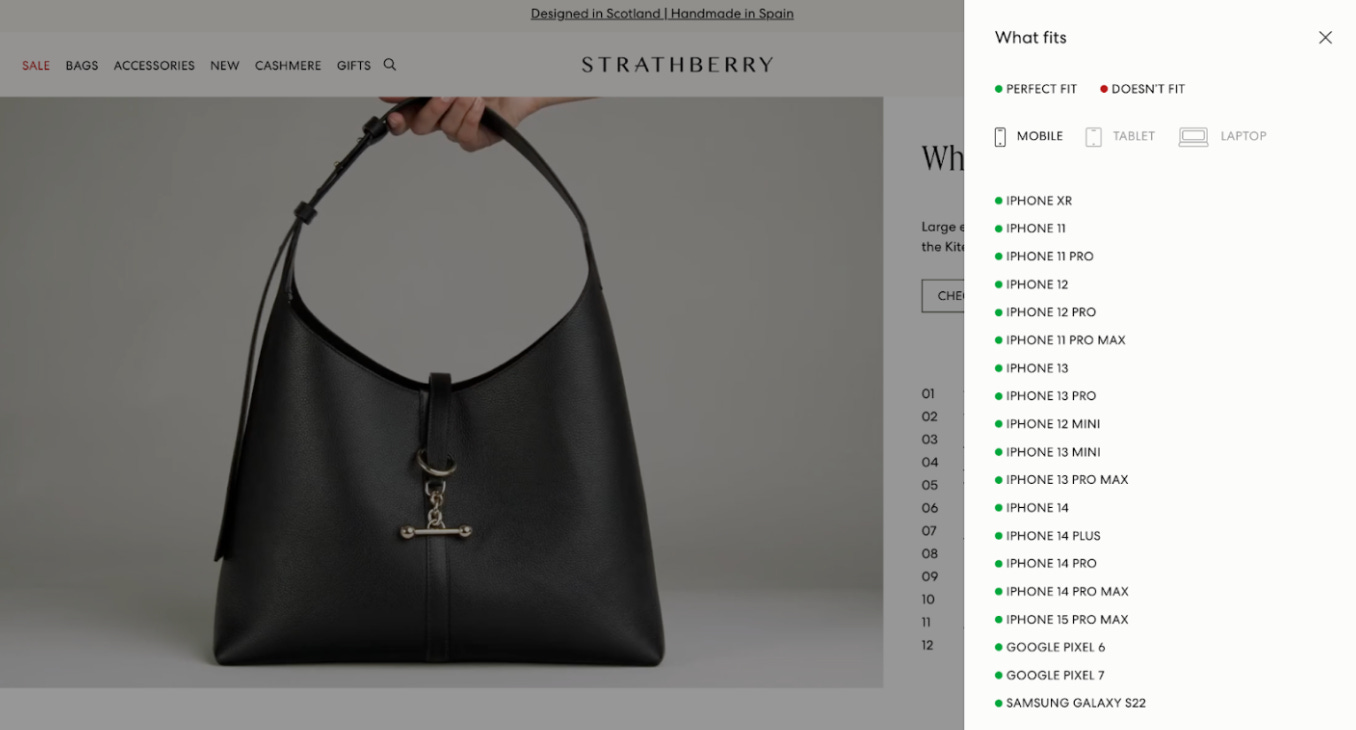
Strathberry ‘what fits’ content
Not only does this approach improve user experience, but it also increases the likelihood of your products appearing in LLM-generated answers for more descriptive, intent-led queries such as “best designer handbag for commuting that can fit a 15-inch MacBook Pro.” By clearly surfacing attributes like material, use case, and size within key on-page elements, you give LLMs the context they need to confidently reference your products in relevant recommendations.
They even take it a step further by listing the make and model of electrical items that don’t fit.
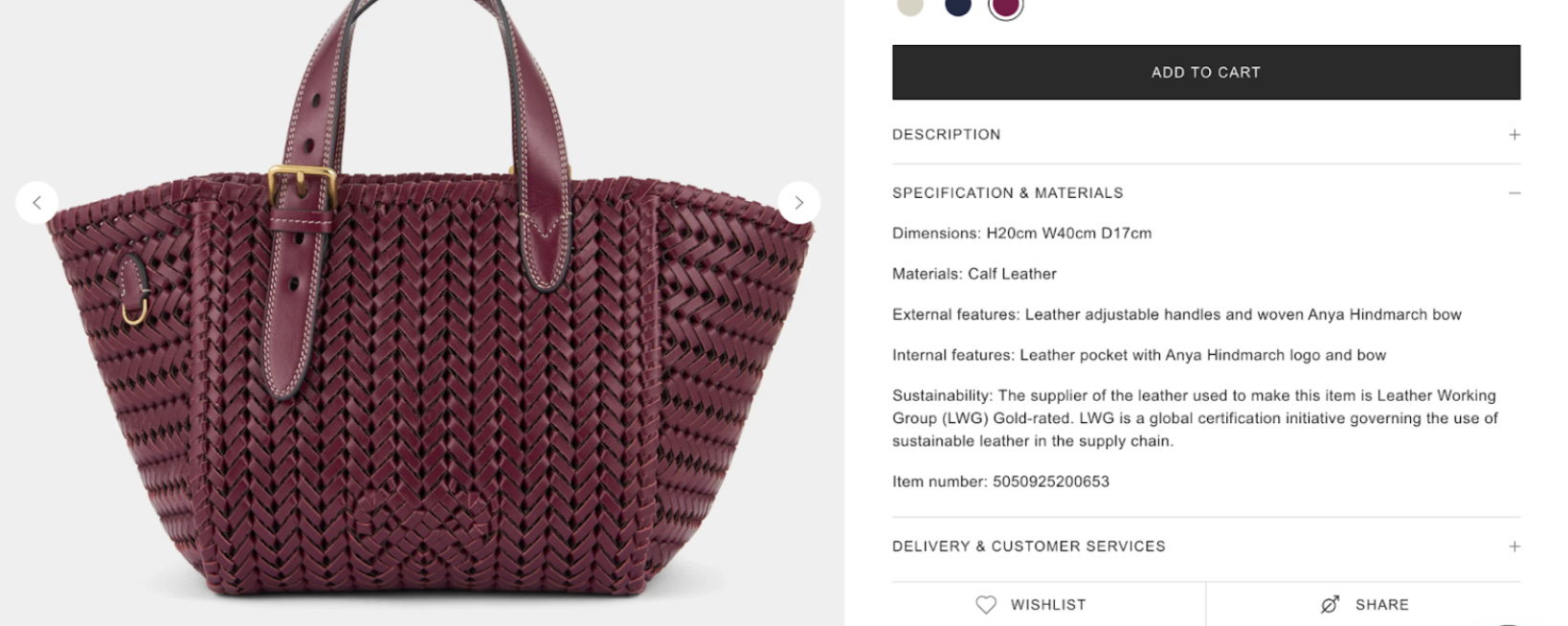
Anya Hindmarch Specifications & Materials
Clear, easy-to-scan subheadings such as “Inside Features” and “Outside Features,” combined with transparent sustainability information from Anya Hindmarch, create an experience that works seamlessly for users, search engines, and LLMs alike, making it easy to fully understand the product and feel informed before purchase.
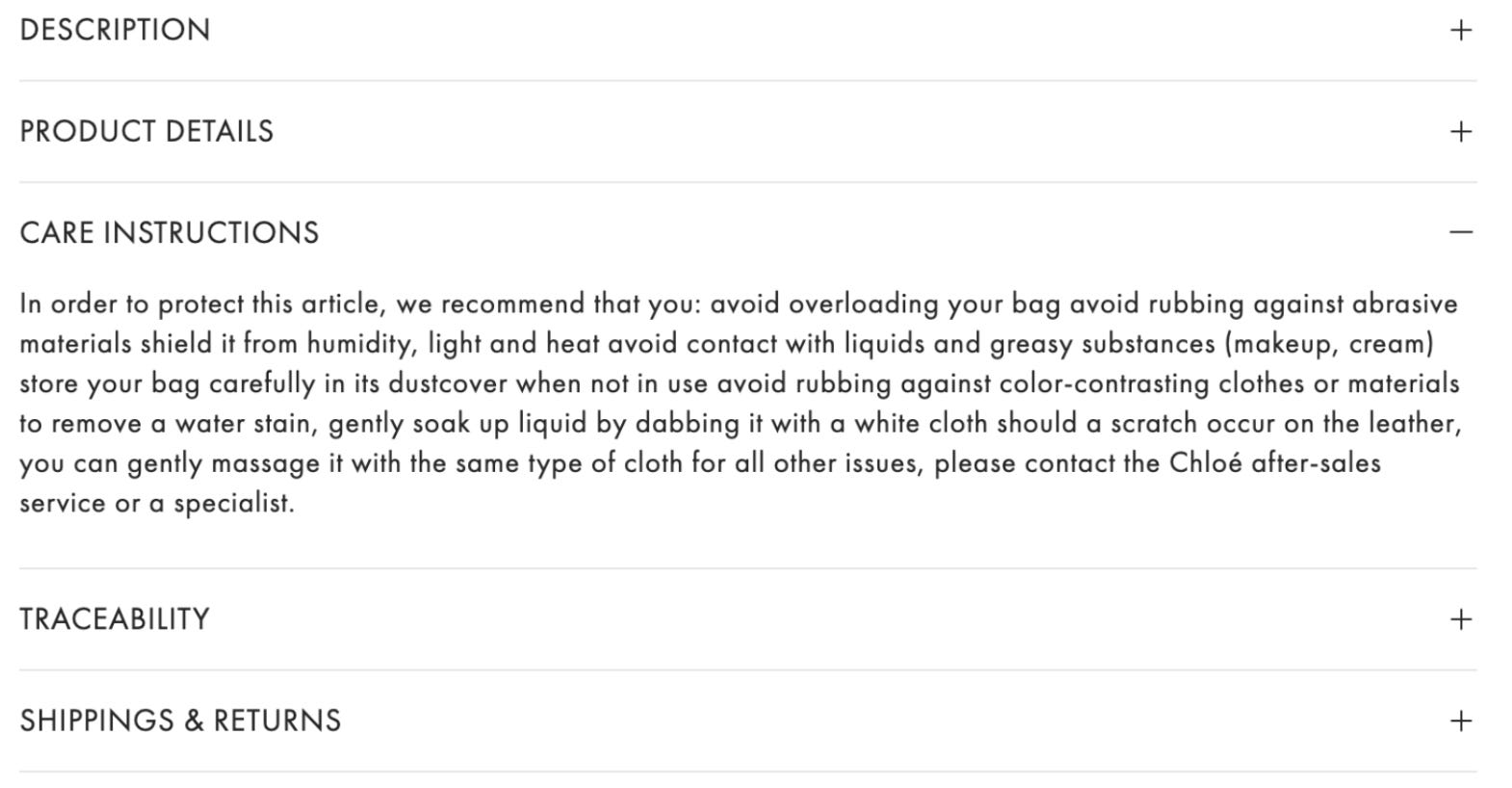
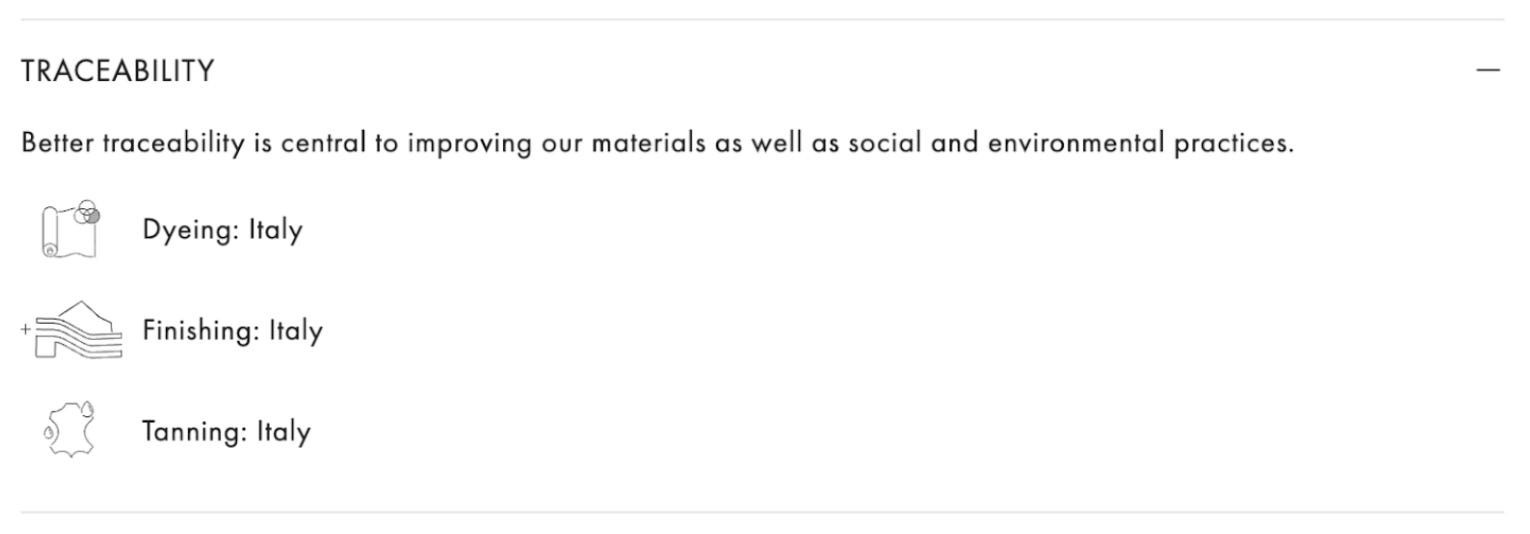
Care Instructions & Traceability From Chloé
These traceability and care information sections strongly reinforce the authority and expertise elements of Google’s E-E-A-T framework. They demonstrate the thought, craftsmanship, and responsibility that go into producing each item, while highlighting the brand’s commitment to transparency. This allows users to assess the product’s global footprint with confidence, and positions the brand to rank and appear in LLM responses for broader fan-out queries such as “designer bag made in Europe.”
Conclusion
Why it’s important to adapt your designer marketing strategy and what to avoid
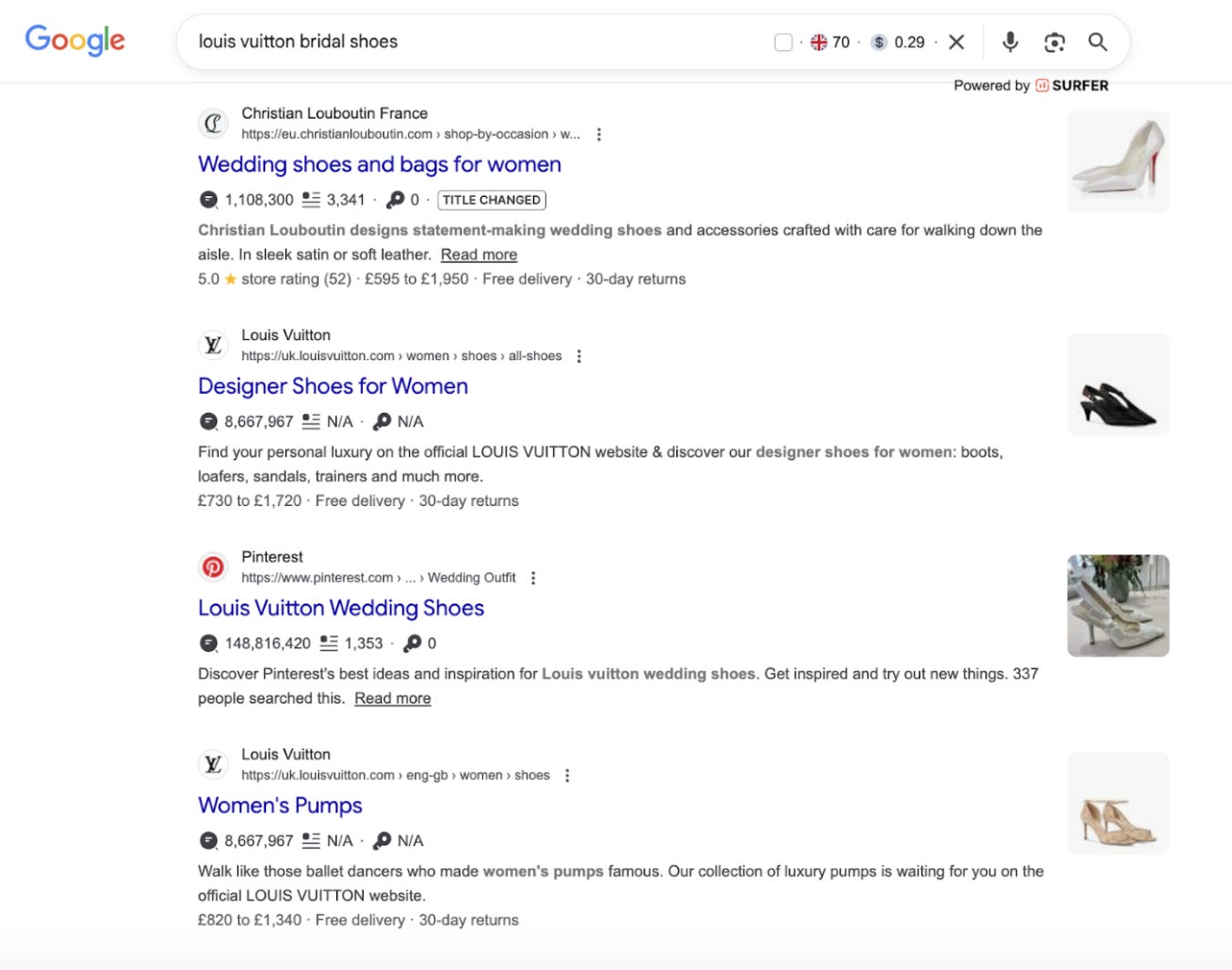
This is a clear example of how a designer brand’s perceived authority can be diluted or misinterpreted by Google. From a simple search for “Louis Vuitton bridal shoes” (which has an average monthly search volume of around 70), the top result returned is Christian Louboutin France, a completely different brand altogether.
This highlights that we can’t assume that search engines will automatically understand brand intent, hierarchy, or relevance, even when it feels obvious to a human user. Without clear, structured signals around product categories, use cases, and brand associations, search engines (and increasingly LLMs) may fill in the gaps incorrectly.
It also shows an SEO page opportunity that Louis Vuitton is missing out on.
Actively guiding how your brand and products are interpreted is now essential to maintaining visibility, authority, and accuracy in both traditional search results and AI-generated answers.